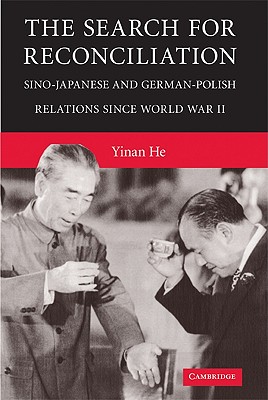
Focusing on two case studies from East Asia and Europe, Yinan He argues that the key to interstate reconciliation is the harmonization of national memories. Conversely, memory divergence resulting from national mythmaking harms long-term prospects for reconciliation.
Why have some former enemy countries established durable peace while others remain mired in animosity? When and how does historical memory matter in post-conflict interstate relations? Focusing on two case studies, Yinan He argues that the key to interstate reconciliation is the harmonization of national memories. Conversely, memory divergence resulting from national mythmaking harms long-term prospects for reconciliation. After WWII, Sino-Japanese and West German-Polish relations were both antagonized by the Cold War structure, and pernicious myths prevailed in national collective memory. In the 1970s, China and Japan brushed aside historical legacy for immediate diplomatic normalization. But the progress of reconciliation was soon impeded from the 1980s by elite mythmaking practices that stressed historical animosities. Conversely, from the 1970s West Germany and Poland began to de-mythify war history and narrowed their memory gap through restitution measures and textbook cooperation, paving the way for significant progress toward reconciliation after the Cold War.
Get The Search for Reconciliation by at the best price and quality guranteed only at Werezi Africa largest book ecommerce store. The book was published by Cambridge University Press and it has pages. Enjoy Shopping Best Offers & Deals on books Online from Werezi - Receive at your doorstep - Fast Delivery - Secure mode of Payment